mostly is enough
Build lasting habits with weekly targets instead of fragile streaks. Aim for most days, not every day.

Why streaks set you up to lose
Traditional habit trackers count consecutive days. One rest day and your 90-day progress resets to zero. This can cause anxiety and guilt — the opposite of what builds habits.
Lally et al. (2010) found that habit formation takes an average of 66 days — and occasional rest days don't derail the process. What matters is consistency over time, not perfection.
Streak-based apps punish you for being human. You get sick, travel, or just need a break — and your "progress" vanishes. That's not motivation. That's anxiety.
A better way to build habits
Weekly targets
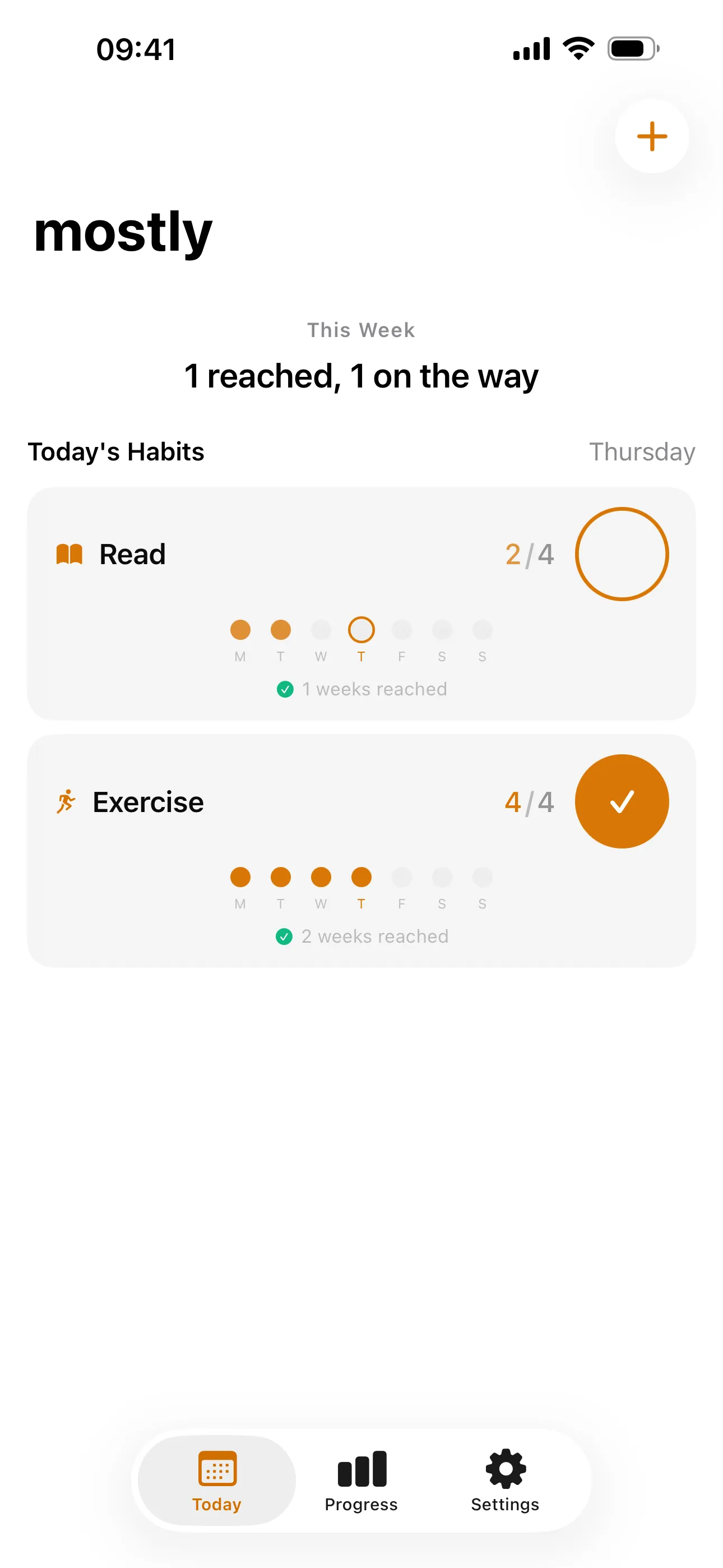
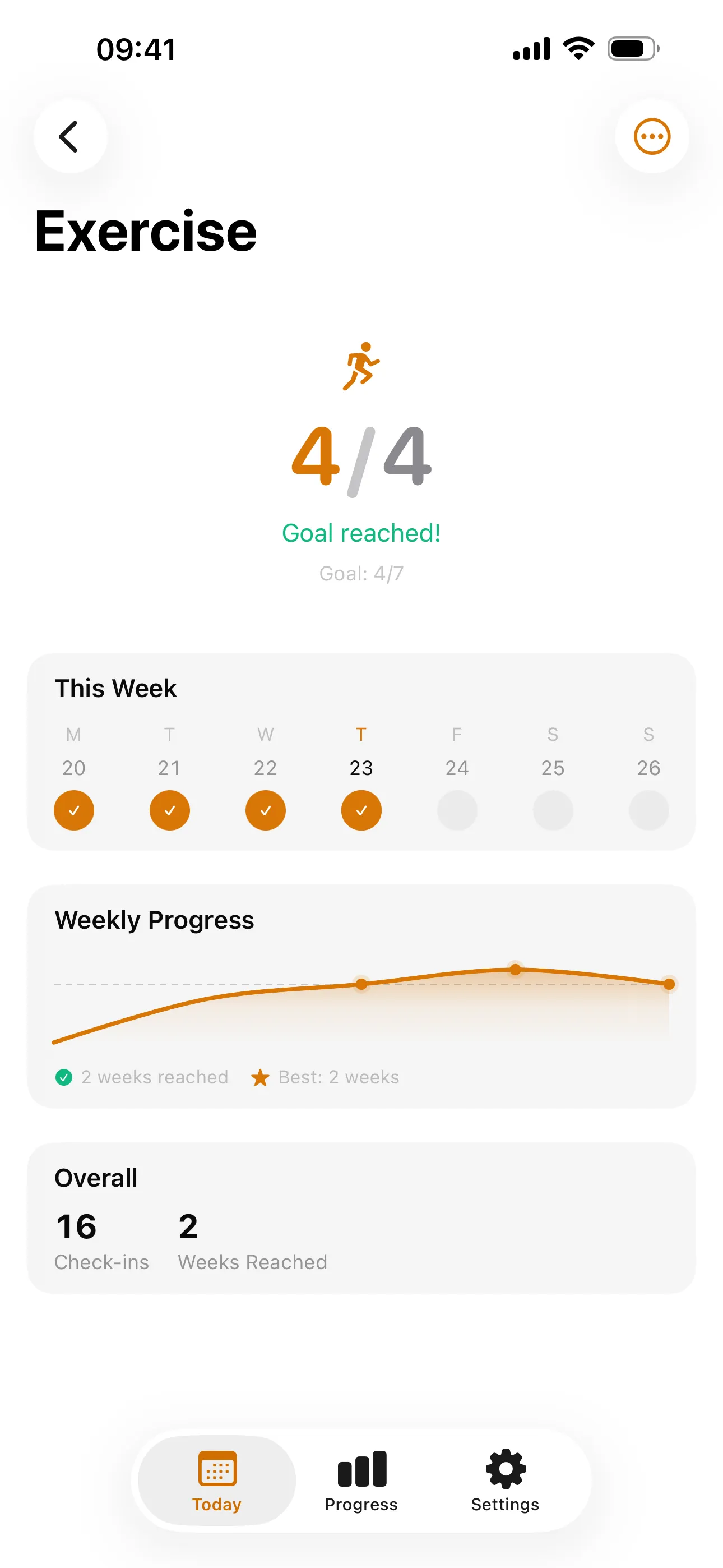
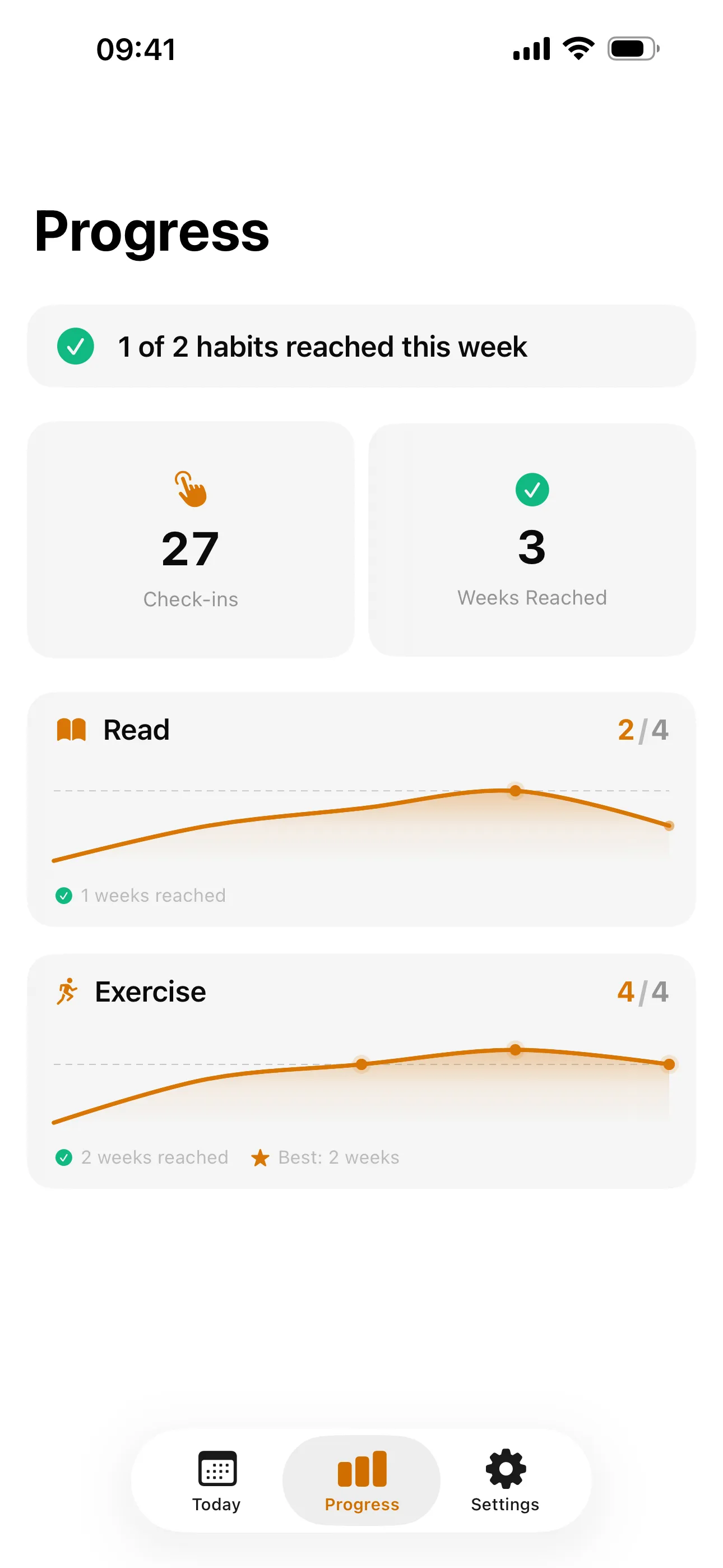
Set a target like 4 out of 7 days. Hit your goal most days, rest when you need to. No punishment for taking a break.
No failure labels
Hit your target? "Goal reached!" Still going? "2 more to go." Week over? "See you next week." No failures. No zeros.
Fresh starts every week
Each week is a fresh start. Last week was tough? This week is a clean slate. No accumulated guilt, no anxiety spirals.
Why people choose mostly
Zero punishment
No streak resets, no HP loss, no shame. Rest days are part of the plan.
Flexible targets
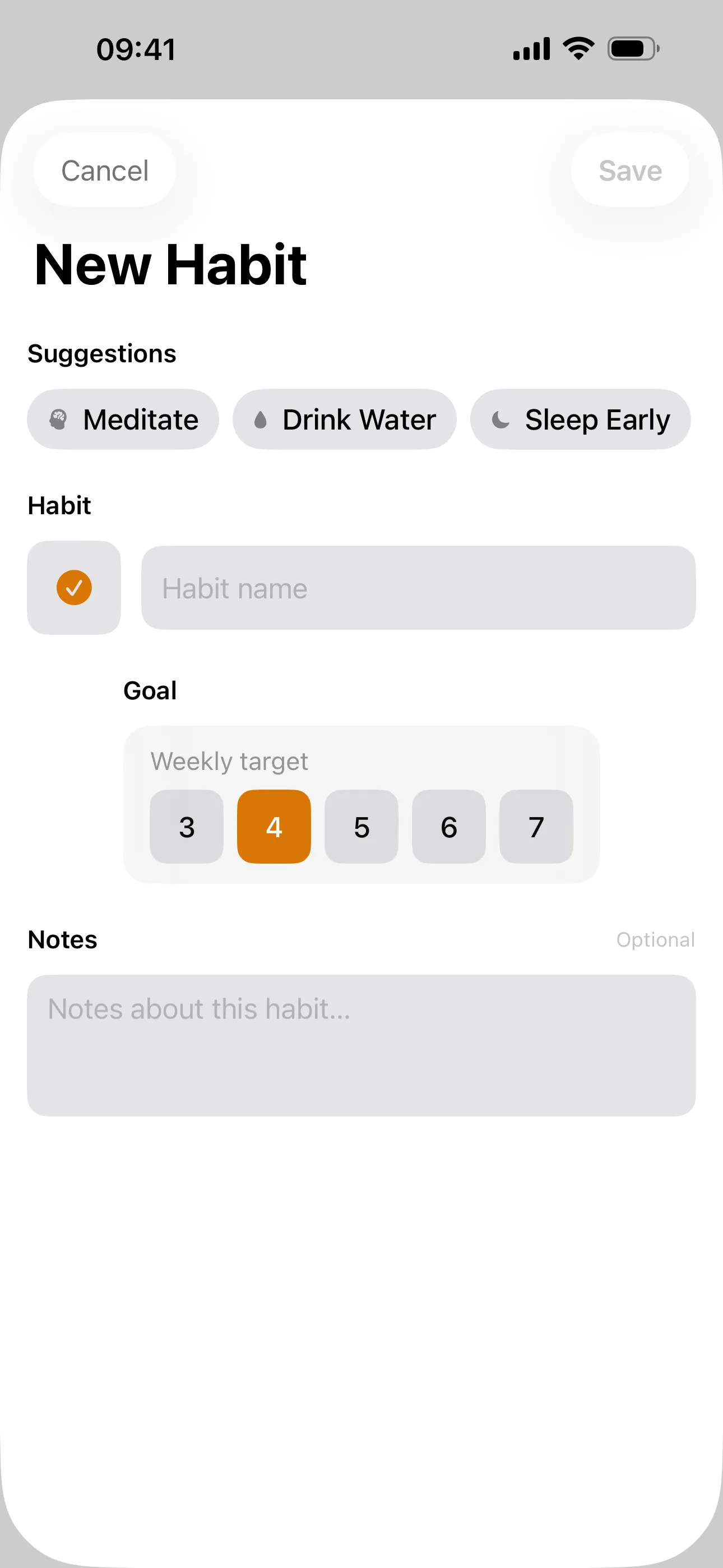
Choose how many days per week works for you. 3/7? 5/7? You decide.
Warm encouragement
Gentle nudges, not guilt trips. Progress over perfection, always.
Simple & focused
No RPG mechanics, no social features, no complexity. Just your habits.
Designed around rest
Rest days are built into the system, not an afterthought. Nothing to feel bad about.
Privacy first
Your data stays on your device, with optional iCloud sync across devices. No tracking, no ads, no data selling.
Home Screen widgets
See your weekly dots and progress ring right on your Home Screen or Lock Screen. No need to open the app.
iCloud sync
Your habits sync seamlessly across all your Apple devices via iCloud.
Works after midnight
Stay up late? Move your day boundary so late-night check-ins still count for the day you mean.
Who mostly is for:
Other comparisons:
From the Habit Lab
Guides for a gentler way to keep going
バーンアウト回復 · 8 分で読めます
バーンアウト後に習慣を立て直す方法(また倒れないために)
バーンアウト後の習慣再建ガイド。連続記録型トラッカーが同じプレッシャーを再現する理由、週間目標の実践例、今週末から始められる 4 週間セルフ評価テンプレート。
번아웃 회복 · 8분 분량
번아웃 후 습관 다시 만들기 (또 망가뜨리지 않고)
번아웃 후 습관을 다시 만드는 실용적 가이드. 연속 기록 기반 트래커가 왜 같은 문제를 다시 만드는지, 주간 목표 방식이 회복 중에 어떻게 작동하는지, 이번 주말부터 해볼 수 있는 4주 자기 점검 방법까지.
Burnout recovery · 8 min read
How to rebuild habits after burnout (without breaking yourself again)
A practical guide to rebuilding habits after burnout. Why streak-based trackers re-create the problem, what a weekly habit tracker actually does in recovery, and a 4-week self-assessment you can run on yourself starting this weekend.
燃尽恢复 · 8 分钟阅读
燃尽后如何重建习惯(不让自己再次崩溃)
燃尽后重建习惯的实用指南。为什么基于打卡链的追踪器会重造问题,每周目标方式在恢复期的实际效果,以及你本周末就能开始的 4 周自我评估模板。
FAQ
What makes mostly different from other habit trackers?
Most habit trackers count consecutive days and reset when you miss one. mostly uses weekly targets — aim for 4 out of 7 days, rest when you need to. No streaks, no resets, no guilt.
Is mostly free?
It's a paid app on the App Store. One purchase and you get the whole thing — no subscription, no ads, no in-app stuff.
Is mostly good for ADHD?
Yes. The weekly target model is naturally forgiving for inconsistent schedules. You don't need to check in every day — just most days. Many people with ADHD find this approach less stressful than streak-based apps.
Does mostly work for late nights or shift work?
Yes. You can move your day boundary as late as 5 AM, so a 2 AM check-in can still count for the day you mean. Weekly targets also fit shifting schedules better than rigid daily plans.
Ready to build habits that last?
Stop chasing streaks. Consistency beats perfection.